Posts

Showing posts with the label cybersecurity service companies

A Cyber Threat Defense Solution

Image
  In the past few years, we have seen more devices connected than ever before. The Internet of Things is a network of physical objects that are embedded with electronics, software, sensors, and connectivity to enable these objects to collect and exchange data. In the future, IoT devices will be everywhere. They will be in our homes, cars, and cities. This will lead to a so-called “smart city” where everything is connected and can be monitored by the government or other entities. As the world becomes more interconnected, cyberattacks multiply. Nolij is a leading cybersecurity company that provides the best cyber protection for companies. It has created an AI-based solution, Raptor, which can detect any cyber threats and protect your company from them. Raptor is a security solution that was created by Nolij to protect companies from cyber threats. The solution was designed with the help of AI and machine learning technologies to detect any potential cyber threats before they be...

Dr Sukumar on Smart Nudging: Can Digital Health Technologies Prevent Suicide | PatientX360™️ | Nolij

Image
Dr Sukumar on Smart Nudging: Can Digital Health Technologies Prevent Suicide & PatientX360™️ Dr. Sukumar discusses OSG’s PatientX360™️ solution and its applications in nudging positive behavior and outcomes for those suffering from depression and anxiety during our webinar  Smart Nudging: Can Digital Health Technologies Prevent Suicide? About Dr. Sukumar Dr. Sukumar is the Founder and CEO of OSG. Passionate that the only way to drive growth is by becoming customer centric, Dr. Sukumar has worked on a large number of engagements, providing our clients both methodological guidance on the use of behavioral analytics and continuous guidance on how to leverage the analytics for better decision making and continued growth. Prior to founding OSG, Dr. Sukumar spent over twenty years as an academic, teaching marketing strategy and advanced analytics at top MBA and Ph.D. programs around the globe. He served as an Academic Dean for a global business school and has served as an expert witn...

Can’t we just TeleEverything? Telehealth in the times of pandemic

Image
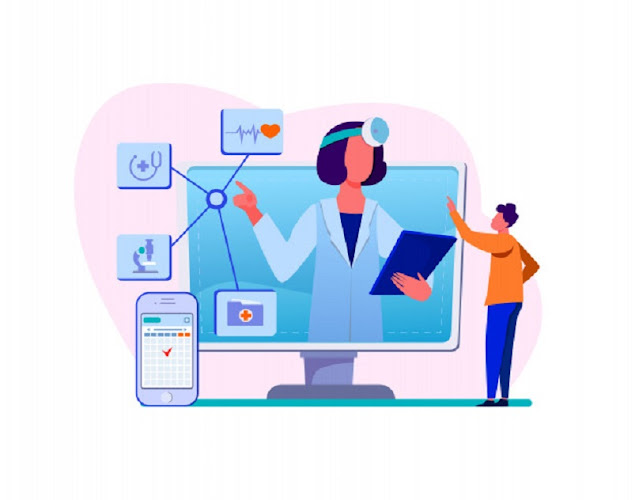
  In today’s busy world many people take advantage of several time-saving facilities like prescription deliveries and telehealth visits. Despite the falls of in-person appointments, telemedicine did not take off until the pandemic hit in 2020. Why Did It Take A Pandemic For Telemedicine To Curl? Before the lockdown began last year, people were scared that it might be hazardous to see a doctor online due to fear of getting a wrong diagnosis. Because of the lockdowns, telehealth became the only way to become medical attention and was a safer substitute for an in-person visit. To ease the extended use of  telehealth services for healthcare , the government delivered momentary regulatory deviations. These variations, as well as adjusted payments for telehealth facilities, have let doctors treat the patients. The Future of Telemedicine The digital health industry has enhanced the patient-provider relationship via mobile apps, patient portals, wearable health sensor devices, and app...

Sim Swapping: It’s Not as Fun as It Sounds: Nolij Consutling

Image
Cybercrime is swelling at a terrible rate. In future days cybersecurity must be smarter since new liabilities mean new prospects, and it continues to dominate IT news, with one of the industry’s premier  cybersecurity service companies . A wide range of authentication solutions starting from short message service (SMS), two-factor authentication (2FA) to multifactor authentication (MFA) can protect an organization from various cyber-attacks. 2FA and MFA have proven to be two effective methods to prevent breaches while maintaining industry and government standards. There are multiple factors to consider with all cybersecurity options, decisions are based on a risk analysis. Authentication “factors” are divided into three types of information the user provides - Something they know (username and password), Something they are (biometrics) and Something they have (a hardware token). If two of these factors (2FA) are used, it makes for a strong protocol, and if all the three factors (MF...